Market Insights
Historic Homes in New London CT & Coastal Lifestyle
April 23, 2026
Market Insights
April 23, 2026
If you want a place where historic streets, waterfront views, and everyday culture all come together, New London stands out. You are not just looking at old houses here. You are looking at a city where architecture, public shoreline access, downtown events, and maritime history still shape daily life. If you are curious about what makes New London special, this guide will walk you through the homes, districts, and coastal character that give the city its identity. Let’s dive in.
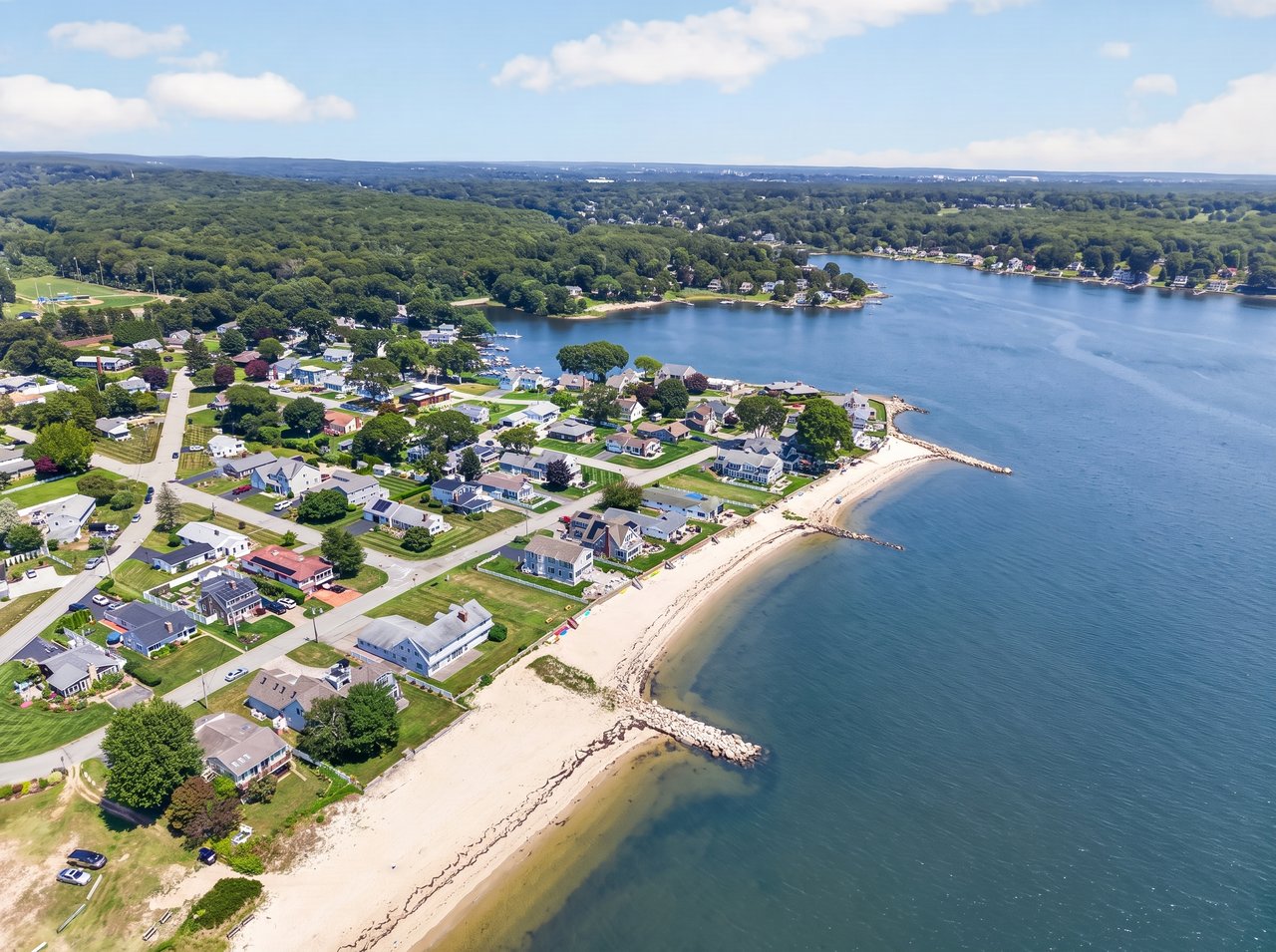
New London sits between the Thames River and Long Island Sound, and that setting gives the city a distinct shoreline identity. According to the City of New London, the community is known for its residential neighborhoods, lively downtown, revitalized waterfront, deep-water harbor, and strong rail, bus, and ferry connections.
That mix matters if you are thinking about lifestyle as much as architecture. In New London, historic homes are part of a broader setting that includes public parks, arts venues, dining, and easy waterfront access.
One of the biggest draws of New London is the range of home styles you can find within a relatively small city. The city’s historic districts include architecture from the colonial era through the early 20th century, with styles such as Georgian, Federal, Greek Revival, Italianate, Queen Anne, Colonial Revival, Tudor Revival, and resort-era revival architecture, as documented by New London Landmarks.
That variety means New London does not feel one-note. As you move through different parts of the city, you can see how different periods of growth left their mark on the housing stock and streetscape.
The Downtown New London Historic District, now referred to as the Historic Waterfront District, reflects the city’s commercial growth in the late 18th and 19th centuries. Its side streets include urban residential and commercial buildings from the same period, along with major landmarks like Union Station and the Custom House, according to New London Landmarks.
If you are drawn to homes and buildings with a strong connection to maritime commerce, this part of New London tells that story clearly. It blends historic character with a central location near downtown and the waterfront.
The Hempstead Historic District centers on the 1678 Hempstead House, described by New London Landmarks as the oldest surviving house in New London. The district also includes mid- to late-19th-century homes built for working-class residents and important social institutions connected to the city’s Black community.
This area shows that New London’s historic identity is not limited to one type of architecture or one chapter of history. It reflects both early settlement and the growth of community institutions over time.
Several other districts highlight New London’s architectural depth. The Coit Street Historic District preserves four surviving 18th-century houses and shows how early Georgian homes were later updated with Greek Revival additions.
The Prospect Street Historic District preserves a streetscape dating from 1838 to 1859, with modest Italianate and Greek Revival homes. The Montauk Avenue Historic District reflects a streetcar-suburb pattern that was largely built out in the first half of the 20th century, where Queen Anne and revival styles are still visible.
The Pequot Colony Historic District began as a summer resort community and later transitioned to include year-round residents. That history left behind late 19th- and early 20th-century revival architecture that still shapes the district today.
The U.S. Housing Corp. Historic District offers another layer of New London’s story. It is a preserved example of early federally sponsored housing, with most homes built between 1918 and 1930 in the Colonial Revival style, based on information from New London Landmarks.
Some places help define New London’s visual identity right away. Whale Oil Row consists of four Greek Revival buildings dating from 1835 to 1845, with Ionic columns and other classical details that reflect the prosperity of the city’s whaling era, according to New London Landmarks.
Post Hill adds even more depth to the local story. It documents development from early settlement through the mid-20th century and includes the Antientest Burial Place, which dates to 1652.
Historic houses are only part of what makes New London appealing. The city was named Connecticut’s third Cultural District in 2022 and the first on the shoreline and in southeastern Connecticut, according to CTvisit.
That designation fits the city well. Downtown is described as very walkable and accessible by rail and ferry, with galleries, murals, and a dense collection of cultural destinations that includes the Garde Arts Center, Lyman Allyn Art Museum, Custom House Maritime Museum, and the Black Heritage Trail.
If you enjoy having things to do close to home, New London offers more than scenic streets. The Garde Arts Center operates in a historic former movie palace and remains a key performing arts venue. The Lyman Allyn Art Museum often explores American art through the lens of Connecticut and New London County, and the Custom House Maritime Museum helps tell the story of the city’s waterfront identity, as noted by CTvisit.
These destinations add a layer of everyday livability that many buyers look for. You can appreciate historic architecture and still have a strong connection to current arts and community life.
New London’s cultural calendar helps bring the city’s downtown and waterfront to life throughout the year. City materials highlight events such as SailFest, the Connecticut Maritime Heritage Festival, the St. Patrick’s Day Parade, Let Loose Thursdays, Salsa en la Plaza, Make Music Day, and the New London Arts Stroll in the City of New London business resource guide.
The city also notes waterfront dining, locally owned restaurants, and international cuisine as part of its everyday character. For you, that can mean a lifestyle that feels active and connected, not just visually interesting.
In New London, the waterfront is not just a backdrop. It is part of how people experience the city. The state’s coastal access guide identifies City Pier and Waterfront Park at the foot of State Street as a public shoreline access point.
That public access is one reason the coastal setting feels practical as well as scenic. You are not simply near the water. You have places where you can enjoy it as part of your routine.
Ocean Beach Park is one of New London’s best-known coastal amenities. CTvisit describes it as a beach and boardwalk destination with rides, waterslides, mini golf, an arcade, an Olympic-sized pool, picnic areas, and seasonal events.
If you want even more outdoor options, the same tourism sources point to nearby Fort Trumbull State Park and Connecticut College’s Arboretum as easy trips from downtown. Together, these spots expand the city’s appeal beyond historic homes alone.
New London’s waterfront history is not abstract. It is still visible in the built environment. The National Park Service notes that the Amistad was moored near the U.S. Custom House and that the cargo was auctioned there in 1840. Today, that building houses the Custom House Maritime Museum.
The Black Heritage Trail adds another important layer to that story by highlighting Black resilience, community institutions, and sites tied to the Amistad story and to New London’s Black residents across different eras. For anyone trying to understand the city beyond surface-level charm, these places offer valuable context.
If you are considering New London, the appeal often comes from the combination of architecture and lifestyle. You can explore areas with colonial-era roots, 19th-century streetscapes, early 20th-century neighborhoods, and waterfront access, all within one city.
That can make your home search more nuanced. Instead of focusing only on square footage or finishes, you may also want to think about walkability, proximity to downtown culture, access to shoreline recreation, and the kind of historic character that fits your goals.
For some buyers, that means looking for a home near the Historic Waterfront District. For others, it may mean exploring districts like Montauk Avenue, Pequot Colony, or Hempstead for a different architectural feel and neighborhood setting.
In a place like New London, context matters. Historic homes can vary widely in style, age, setting, and relationship to downtown or the waterfront. Even within the same city, the feel of one historic district can be very different from another.
That is why it helps to work with someone who understands how local housing character and lifestyle fit together. If you are weighing shoreline access, historic charm, or the tradeoffs between location and property style, a clear local perspective can help you make a more confident decision.
If you are thinking about buying or selling in New London or elsewhere in southeastern Connecticut, Christopher Maynard offers the kind of local insight, honest guidance, and responsive support that can make the process feel much more manageable.

A Realtor's take on today's mortgage rates and the opportunities they're creating for both buyers and sellers in New London County.

A Realtor's guide to the best fall events in Niantic and Waterford, CT — pumpkin patches, harvest festivals, and foliage walks worth the drive this autumn.

Current market data for Waterford and New London County, explained by a Realtor who works this coastline every day.


Real estate decisions deserve thoughtful strategy and professional support. Christopher Maynard brings dedication, local knowledge, and a friendly approach to every client relationship. Together, you’ll move forward with clarity and confidence.

Christopher Maynard Real Estate
132 BOSTON POST RD EAST LYME, CT 06333