Market Insights
What Norwich's Median Home Price Doesn't Tell You about Real Estate
August 20, 2026
Market Insights
August 20, 2026
Pull up three different sites for Norwich, Connecticut home prices and you'll get three different numbers that don't agree with each other. One site says the median list price sits at $312,000 as of August 2026. Another has the median sale price at $300,000 as of October 2025, up 16.5 percent year over year. Zoom into just the Central Norwich neighborhood on that same platform and the median drops to $251,000. None of these are wrong. They're measuring different things, and more specifically, different places, all of which happen to share a zip code and a city hall.
Norwich isn't one housing market wearing one price tag. It's a cluster of former mill villages, each with its own building stock, its own architectural period, and its own price range, that got incorporated into a single city more than a century ago and never fully merged into one market. If you're comparing Norwich to Waterford, East Lyme, or any other New London County town using a single median number, you're comparing an average of several very different neighborhoods to a town that doesn't have that internal split. That's the gap worth understanding before you trust any headline figure.
Norwich carries nine recognized neighborhoods inside its city boundary, a legacy of its 19th century identity as a cluster of separate textile mill towns: Taftville, Greeneville, Yantic, and Occum among them, each built around its own mill and its own main street. Laurel Hill grew as the merchant class neighborhood overlooking the Thames. Downtown, known historically as Chelsea, sat at the point where the Yantic, Shetucket, and Thames rivers meet, and still holds a dense core of 18th century buildings.
Each village has its own housing character:
Village | Housing character | What it signals about price |
|---|---|---|
Taftville | Mill housing from the Ponemah Mill era, added to the National Register in 1999, mixed with ranches and Cape Cods | Single-family homes run from roughly $125,000 to upward of $480,000, with manufactured homes in the $50,000 to $150,000 range |
Laurel Hill | Colonial and Victorian homes plus the Thermos on the Thames condos, converted in 1989 from the 1912-13 Thermos vacuum flask plant | Industrial-loft character with river views, a different buyer pool than the single-family villages |
Greeneville | A National Register historic district listed in 2005, covering 683 contributing buildings across roughly 300 acres | Dense historic housing stock with preservation considerations that affect renovation cost and timeline |
Yantic | A planned mill village with grid streets and mill house duplexes, built around a mill that closed in 1988 | Older, smaller-footprint housing at the more affordable end |
Occum | Former mill town, now mostly ranch and Cape Cod housing | Among the more affordable single-family stock in the city |
East Great Plains | Midcentury ranches, Capes, and condominiums | Reads more suburban than the mill villages |
Downtown / Chelsea | 18th century commercial core, now the site of active loft and mixed-use conversion | The neighborhood currently under the most construction and price pressure |
The Taftville and Occum area alone carries a median real estate price of $294,078, according to neighborhood-level data, a number that sits close to the citywide figure but represents a completely different housing stock and buyer than what you'd find in a Laurel Hill riverfront condo or a Downtown loft conversion. When a portal reports one median for all of Norwich, it's folding all of these into a single line.
The reason this matters more this year than in a quieter one is that Downtown Norwich is in the middle of a real, named redevelopment push, and it's concentrated almost entirely in the neighborhood that's historically had the smallest and oldest housing stock in the city.
In this year's State of the City address, Norwich's mayor confirmed two mixed-use housing conversions moving forward downtown: Thames Plaza, a conversion of former office space at 101 Water Street, and The Fairhaven, a historic renovation at 24 Broadway. Both are structured as transit-oriented developments working with the Connecticut Municipal Development Authority, with Norwich positioned to be the first municipality in the state to use that particular program. The address also laid out a vision to connect Downtown, Howard T. Brown Memorial Park, the Marina, and the Transportation Center into one walkable district rather than three separate destinations.
The Marina at American Wharf is part of the same story, just on a longer timeline. The 160-slip marina at the center of downtown changed ownership back in 2023, and the new owners set out to fill the waterfront restaurant space, add an event tent for weddings and community gatherings, upgrade the electrical infrastructure, and eventually reinstall a fueling station. Co-owner Brittany Dwyer told a local television station at the time, "we really want to get transients in here also," pointing to the marina's Fourth of July draw and its proximity to Mohegan Sun as reasons to expect more boat traffic once the upgrades were complete. Three years later, the mayor's 2026 address still names the Marina as one leg of the same downtown vision as Thames Plaza and The Fairhaven, which tells you the waterfront investment hasn't been a one-year story, it's been building for a while.
That multi-year build-up shows up in the numbers. Central Norwich's own pace has shifted: homes there took a median of 33 days to sell as of October 2025, up from 23 days the year before, even as 72 homes sold that month compared to 67 the year prior. More activity, slower to close, in the exact neighborhood absorbing new conversion units. That's a different market signal than what's happening out in Taftville or Occum, where the housing stock is settled and the redevelopment story doesn't apply.
If you're a buyer weighing Norwich against a shoreline town like Waterford or East Lyme, the citywide median isn't a useless number, but it's an average of markets that behave differently enough that the average obscures more than it reveals. Before you treat any Norwich figure as comparable to a single-village town's median, it helps to ask:
A seller in Laurel Hill pricing a Thermos on the Thames unit is competing in a different pool than a seller listing a Cape Cod in Occum, even though both addresses say Norwich, CT. Sellers benefit from the same clarity. A home in Greeneville's historic district carries preservation considerations that a ranch in East Great Plains doesn't, and that affects both pricing strategy and the pool of buyers likely to make an offer.
Norwich's median price isn't broken. It's doing exactly what an average does: blending genuinely different markets into one number. The city's nine mill villages each have their own building stock, their own price range, and right now, their own trajectory, with downtown absorbing new conversion inventory while the outlying villages hold steadier. Knowing which Norwich you're looking at, before you compare it to another town or price a listing against it, is the difference between reading the market and misreading it.
Is Norwich more affordable than shoreline towns like Waterford or East Lyme? It depends heavily on which Norwich neighborhood you're comparing. Taftville and Occum's single-family stock trends toward the lower end of the county, while a Laurel Hill riverfront condo or a new downtown loft conversion sits in a different price tier entirely. A single citywide median doesn't capture that spread.
Will the downtown redevelopment raise prices across all of Norwich? The current activity, Thames Plaza, The Fairhaven, and the Marina at American Wharf's revival, is concentrated in the Downtown and Chelsea core. There's no indication in the available data that it's affecting pricing or pace in outlying villages like Yantic or East Great Plains the same way.
If you're trying to figure out which Norwich neighborhood actually fits what you're looking for, or you're pricing a listing and want a comparison that accounts for which village it sits in, Chris Maynard can walk through the specifics with you. Let's Connect.
A Realtor's guide to the best fall events in Niantic and Waterford, CT — pumpkin patches, harvest festivals, and foliage walks worth the drive this autumn.
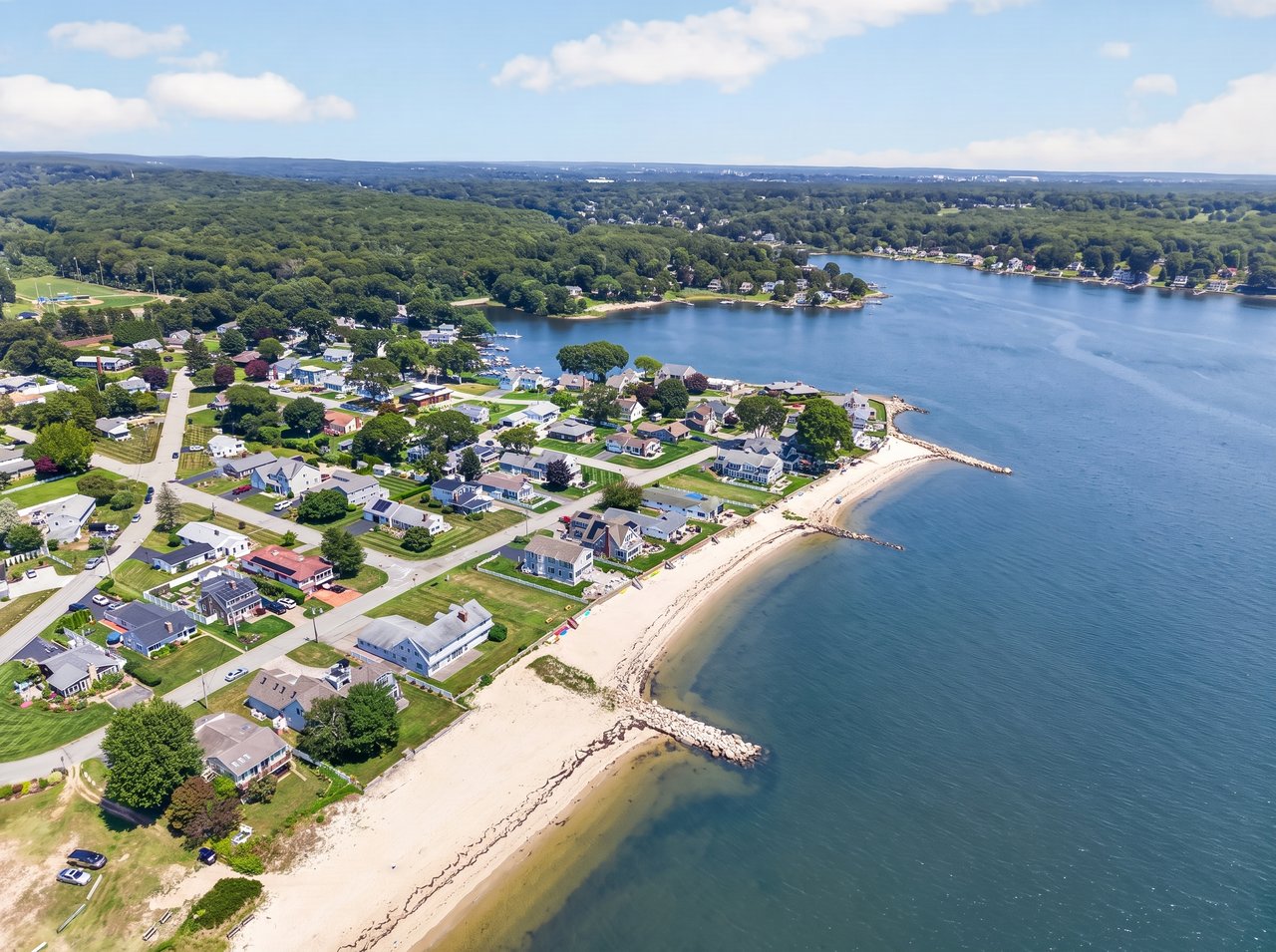
Current market data for Waterford and New London County, explained by a Realtor who works this coastline every day.

Real estate decisions deserve thoughtful strategy and professional support. Christopher Maynard brings dedication, local knowledge, and a friendly approach to every client relationship. Together, you’ll move forward with clarity and confidence.

Christopher Maynard Real Estate
132 BOSTON POST RD EAST LYME, CT 06333