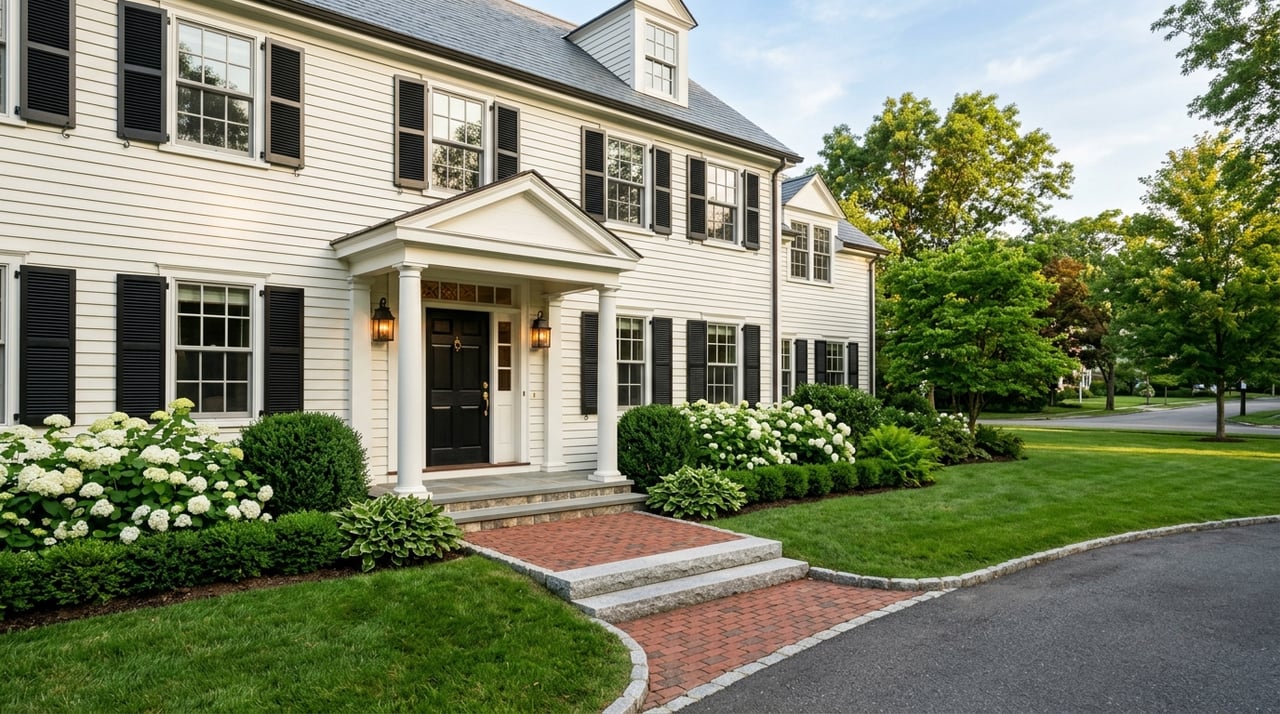
Market Insights
Norwich vs. New London Housing: Where Budget Goes Further
May 21, 2026
Market Insights
May 21, 2026
Trying to decide whether your money goes farther in Norwich or New London? You are not alone. Many buyers in Southeastern Connecticut are weighing the same question, especially when they want the right mix of price, location, home style, and day-to-day convenience. The good news is that the answer becomes much clearer once you compare pricing, housing stock, and lifestyle side by side. Let’s dive in.
If your main goal is stretching your budget, Norwich is usually the more affordable option. Realtor.com reported a March 2026 median listing price of $269,500 in Norwich, compared with $339,000 in New London. Redfin also showed a lower March 2026 median closed-sale price in Norwich at $309,500, versus $345,500 in New London.
That creates a meaningful gap. Based on those figures, Norwich was about $69,500 lower on median listing price and about $36,000 lower on median closed-sale price. For many buyers, that difference can affect monthly payment, down payment, or how much room you have for repairs and updates.
There is also a longer-view affordability baseline that points in the same direction. Census QuickFacts shows a median owner-occupied housing value of $242,300 in Norwich and $253,300 in New London. That data does not move as quickly as active market pricing, but it supports the same general pattern.
Norwich tends to offer more variety in housing types and price points. According to the city’s Affordable Housing Plan, 47% of Norwich housing units are multifamily, and the city has more townhouses, two-family homes, and larger multifamily structures than many nearby towns.
That matters because a wider housing mix often gives you more ways to enter the market. You may find older in-town homes, attached housing, or multifamily properties that offer more square footage or a lower entry price than you would expect in a tighter market.
Norwich also has an older housing stock. The city reports that 38% of homes were built before 1929 and 40.2% were built before 1970. For you as a buyer, that can mean more character, more historic homes, and more opportunities where cosmetic or system updates may play a role in value.
New London tends to command a location premium. The city describes itself as a compact community with intimate residential neighborhoods, a lively downtown, and a revitalized waterfront. Planning materials also point to a mix of single-family homes, multifamily homes, established neighborhoods, and historic districts.
In practical terms, New London often appeals to buyers who want a denser setting with stronger downtown and waterfront access. That type of environment can support higher prices, especially when buyers place a premium on convenience, transit, and proximity to the waterfront.
The city’s size and density help explain part of that premium. Census QuickFacts shows New London has 28,081 residents on 5.62 square miles, compared with 39,993 residents on 28.06 square miles in Norwich. That makes New London much denser, which can shape both feel and pricing.
One of the biggest mistakes buyers make is assuming the cheaper city will always have cheaper homes. That is not always true here. While Norwich is more affordable on a citywide basis, some Norwich neighborhoods are priced above New London’s overall median listing price.
Realtor.com neighborhood data shows Yantic at $487,000 and Taftville at $381,950, both above New London’s citywide median listing price of $339,000. On the New London side, South New London was listed at $449,900, showing that premium pricing exists there too.
The takeaway is simple: shop by neighborhood and property type, not just by city name. If you are comparing a historic home in one area, a condo near downtown in another, and a two-family in a third, your budget can go very different distances.
Norwich is a strong option if you want variety. Based on city housing data and preservation information, you are more likely to see older homes, attached housing, multifamily properties, and historic housing in and around established in-town areas.
Norwich also has two local historic districts, Norwichtown and Little Plain, and the zoning code includes village-district areas intended to preserve historic or distinctive character. If you like antique homes or properties with architectural detail, Norwich may give you more options to explore.
At the same time, older housing can come with trade-offs. You may need to think about updates, maintenance, or long-term improvements as part of the real budget.
New London generally reads as the more urban and mixed-use market. Official city descriptions highlight a compact setting, active downtown, revitalized waterfront, and residential areas that include both older established neighborhoods and future development areas.
Planning materials also reference historic districts with Federal, Greek Revival, and Victorian-era architecture. If you want a home with character in a more walkable, city-oriented setting, New London may feel like a stronger fit.
In many cases, the trade-off is lot size and housing style. You may find that New London offers more location convenience, while Norwich may offer more space or flexibility for the same budget.
Your budget is important, but so is how you live every day. If commuting, transit access, or regional connections matter to you, New London has a clear edge in transportation options.
SEAT Route 1 runs between Norwich and New London all week. Route 2 connects Norwich, Groton, and New London Monday through Saturday, and Route 980 serves weekday commuters traveling between Norwich and the Groton/New London Sub Base and Electric Boat.
New London Union Station adds another layer of convenience with access to Amtrak, commuter rail, intercity and local buses, and ferries. Norwich, by contrast, does not have passenger rail service in its rail corridor.
There is also a commute-time difference. Census QuickFacts reports a mean travel time to work of 24.0 minutes in Norwich and 19.2 minutes in New London. That is a difference of about 4.8 minutes, which may or may not matter much depending on your work routine.
Drivers should also be aware of current traffic conditions tied to the Gold Star Bridge project, which the City of New London says began in April 2026 and is expected to keep the current traffic pattern in place through the end of 2030. Norwich, meanwhile, emphasizes access to I-395 and Route 2 via Route 82 and related corridors.
If you want the most room in your budget, Norwich usually comes out ahead. It can be a strong choice when you are looking for more house, more flexibility in housing type, or more potential to buy a property you can update over time.
If you care more about a compact setting, downtown energy, transit access, and waterfront proximity, New London may be worth the higher price. For some buyers, the convenience and feel of the location justify the premium.
There is also a difference in ownership patterns. Census QuickFacts shows an owner-occupied housing rate of 53.8% in Norwich versus 36.1% in New London. That does not tell the whole story, but it does reflect a different housing mix between the two cities.
When you are deciding between Norwich and New London, it helps to compare homes through a few simple filters:
This kind of side-by-side comparison usually tells you more than median price alone. A lower-priced home that needs major work may not feel more affordable in practice, while a higher-priced home in a convenient location may better fit your daily life.
If you want help comparing Norwich and New London in a way that matches your goals, budget, and timeline, Christopher Maynard can help you sort through the options with clear local guidance and a process that feels informed, not overwhelming.

A Realtor's take on today's mortgage rates and the opportunities they're creating for both buyers and sellers in New London County.

A Realtor's guide to the best fall events in Niantic and Waterford, CT — pumpkin patches, harvest festivals, and foliage walks worth the drive this autumn.
Current market data for Waterford and New London County, explained by a Realtor who works this coastline every day.

Real estate decisions deserve thoughtful strategy and professional support. Christopher Maynard brings dedication, local knowledge, and a friendly approach to every client relationship. Together, you’ll move forward with clarity and confidence.

Christopher Maynard Real Estate
132 BOSTON POST RD EAST LYME, CT 06333